
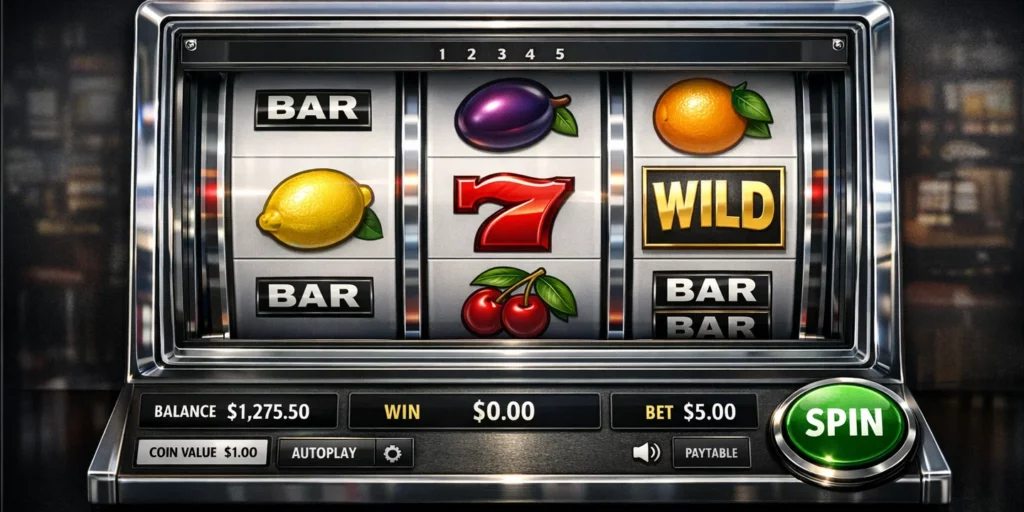
Every successful gambler knows a secret that beginners often overlook: winning at https://www.acepokies.com/ starts before you ever spin the reels. While most players focus entirely on finding the “luckiest” game, professional players focus on their bankroll. Without a solid plan, even the luckiest streak can turn into a financial headache.
Bankroll management isn’t just about saving money; it is about extending your playtime and ensuring that gambling remains a fun, stress-free hobby. In this guide, we break down the essential strategies—from the “Unit” system to the psychology of loss—that will transform how you play.
The Golden Rule: Only Bet What You Can Lose
Before we dive into technical systems, we must establish the foundation of all gambling logic. You should only ever deposit funds that you have designated for entertainment. Think of your bankroll like a movie ticket or a dinner out; once you spend it, that money has fulfilled its purpose.
If you find yourself using money meant for rent, groceries, or bills, stop immediately. A clear head is your greatest asset. When you play with “scared money,” you make poor decisions, increase your stress levels, and lose the enjoyment that https://www.acepokies.com/ offers.
Understanding the “Unit” System
One of the most effective ways to manage your funds is the Unit System. Professional bettors use this to standardize their bets and remove emotion from the equation. Instead of thinking in dollars, you think in units.
How to Calculate Your Unit
First, determine your total bankroll for the session. Let’s say you have $200. A “unit” is typically $1\%$ to $2\%$ of that total.
-
Total Bankroll: $200
-
1 Unit ($1\%$): $2
By betting only one unit per spin, you guarantee yourself at least 100 spins (not counting any wins that replenish your balance). This mathematical approach prevents you from “tilting”—the act of making massive, irrational bets after a loss.
Adjusting Units Based on Volatility
If you play a high-volatility slot, you might drop your unit size to $0.5\%$. Conversely, if you play a low-volatility game with frequent small wins, you might stick to $2\%$. This system keeps you in the game longer and allows the math of the slot machine to work in your favor over time.
Setting Concrete Boundaries: Loss Limits and Win Goals
Most players know when to start, but very few know when to stop. To protect your bankroll, you must set two types of boundaries before you log in.
The Loss Limit
A loss limit is the exact amount of money you are willing to lose in a single session. Once you hit that number, you close the browser. No exceptions. This discipline separates the winners from the losers. It prevents a bad day from becoming a financial disaster.
The Win Goal
It sounds counterintuitive, but you also need a “stop-win” goal. If you turn $100 into $300, it is tempting to keep going to reach $1,000. However, the house edge exists for a reason. If you play long enough, the house usually wins. By setting a win goal (e.g., “I will stop if I double my money”), you ensure that you actually walk away with a profit rather than giving it all back to the casino.
The Psychological Trap: Never Chase Losses
Chasing losses is the fastest way to go broke. It happens when a player loses a significant amount and feels the “need” to win it back immediately. They increase their bet sizes—violating the Unit System—in hopes of one big “save-it-all” spin.
Why Chasing Fails
Mathematically, the slot machine does not know you are losing. Every spin is an independent event governed by a Random Number Generator (RNG). Increasing your bet doesn’t increase your odds of winning; it only increases the speed at which you lose the remainder of your bankroll.
If you feel angry or desperate to “get even,” take a break. Walk away, grab a coffee, and realize that the money is gone. You can always come back another day with a fresh bankroll and a clear mind.
Practical Tips for Longevity
-
Use Bonuses Wisely: Always check the promotions at https://www.acepokies.com/. Bonuses provide extra “units” without costing you more cash, but always read the wagering requirements.
-
Keep Records: Track your wins and losses in a simple spreadsheet or notebook. Seeing the numbers in black and white helps you stay honest about your habits.
-
Slow Down: Don’t use the “Turbo Spin” or “Auto-Play” features if you are on a tight budget. Clicking manually helps you feel the rhythm of the game and keeps you mindful of your spending.
Final Thoughts
Bankroll management is the difference between a one-time gambler and a long-term player. By implementing the Unit System, respecting your loss limits, and refusing to chase your losses, you take control of the experience. Gambling should be a thrill, not a financial burden. Master your money first, and the wins will be much sweeter when they arrive.
About the Author
This guide was crafted by Winfred, a gambling strategy expert who believes that discipline is the most powerful tool in any player’s arsenal.